Atomic Precision: How Chemists Are Reshaping Molecules to Defeat Disease
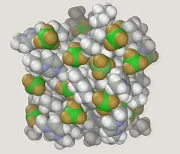
Photo: P99am, Public domain, via Wikimedia Commons
At first glance, two molecules that share an identical chemical formula might appear to be perfect twins. Same atoms, same count — yet their behavior inside the human body can diverge dramatically. This is the fundamental paradox at the heart of isomer chemistry, a discipline that is quietly transforming how pharmaceutical researchers design and approve new medicines.
Isomers are compounds that possess the same molecular formula but differ in the arrangement or spatial orientation of their atoms. That distinction — sometimes as subtle as a single bond rotated a few degrees — can determine whether a drug binds to the correct receptor, triggers an unintended reaction, or simply passes through the body without effect. Understanding and exploiting these differences has become one of the most productive frontiers in modern medicinal chemistry.
What Exactly Is an Isomer?
The term "isomer" encompasses several distinct categories, each defined by a different type of structural variation. Structural isomers share a molecular formula but connect their atoms in entirely different sequences. Stereoisomers, by contrast, maintain the same bonding order but differ in the three-dimensional arrangement of atoms in space.
Within stereoisomers, chemists pay particular attention to a subgroup called enantiomers — molecules that are non-superimposable mirror images of one another, much like a left hand and a right hand. These mirror-image pairs are described as chiral, from the Greek word for hand. The human body, built from chiral biological machinery, often responds to one enantiomer in a profoundly different way than it responds to the other.
A third category, geometric isomers, arises when atoms are fixed in place around a double bond or ring structure and cannot freely rotate. Here, the spatial arrangement — whether substituents sit on the same side (cis) or opposite sides (trans) of the bond — can alter a compound's pharmacological profile entirely.
From Laboratory Curiosity to Clinical Breakthrough
For much of the twentieth century, drug manufacturers frequently sold medications as racemic mixtures — equal blends of both enantiomers of a chiral compound. The assumption was often that the inactive form was simply inert and harmless. Decades of research have demonstrated that this assumption was dangerously optimistic.
Today, pharmaceutical companies invest considerable resources into isolating or synthesizing the single, therapeutically active form of a chiral drug, a process known as chiral switching. The FDA has supported this effort, and the results have been measurable. Esomeprazole, marketed under the brand name Nexium, represents one of the most commercially successful chiral switches in history. It is the S-enantiomer of omeprazole, the proton pump inhibitor sold as Prilosec. Clinical data suggested that the isolated enantiomer offered improved acid suppression for certain patients, and the drug went on to generate billions of dollars in annual revenue — while also reigniting debate about whether incremental molecular refinements justify new patents.
A more unambiguous clinical success story involves the antidepressant escitalopram, the purified S-enantiomer of citalopram. Research indicated that the R-enantiomer actively interfered with the drug's therapeutic mechanism by binding to an allosteric site on the serotonin transporter. Removing it produced a compound with a cleaner pharmacological profile and, for many patients, a more favorable side-effect burden.
Isomers in the Fight Against Cancer
Oncology has proven to be a particularly fertile ground for isomer-based drug design. Researchers studying the behavior of geometric isomers have made significant inroads in developing targeted cancer therapies.
Consider tamoxifen, long a cornerstone of hormone receptor-positive breast cancer treatment. Tamoxifen is metabolized in the body into active compounds, including endoxifen, which exists as both cis and trans geometric isomers. The trans form binds avidly to estrogen receptors and blocks tumor growth; the cis form does not. Pharmaceutical researchers are now developing enantiopure formulations of endoxifen to deliver the active geometric isomer directly, potentially improving outcomes for patients who are poor metabolizers of tamoxifen — a population that may represent up to 10 percent of users.
In the realm of rare cancers, isomer chemistry has opened doors that traditional drug design could not. Enasidenib, an FDA-approved treatment for relapsed or refractory acute myeloid leukemia with IDH2 mutations, emerged from careful structural optimization that included attention to molecular geometry. Its development illustrates how understanding three-dimensional molecular shape is now considered non-negotiable in early-stage drug design.
Rare Disease Therapies and the Isomer Advantage
For patients living with rare genetic disorders — conditions that historically attracted minimal pharmaceutical investment — isomer chemistry is providing new avenues for treatment development. Because rare disease populations are small, researchers must design drugs with exceptional precision. There is little margin for a compound that is merely "good enough."
Sapropterin dihydrochloride, approved for phenylketonuria (PKU), a rare metabolic disorder, is a synthetic version of a naturally occurring chiral cofactor. Its development required careful attention to stereochemical purity, as only the correct enantiomer activates the relevant enzyme pathway. For PKU patients, the precision of that molecular architecture translates directly into the ability to tolerate dietary protein — a meaningful quality-of-life improvement.
Similarly, researchers working on therapies for lysosomal storage diseases have found that the spatial configuration of substrate analogs dramatically affects enzyme binding efficiency. Investigational compounds currently in clinical trials for several of these conditions owe their promise in part to stereochemical refinements made possible by advances in asymmetric synthesis.
The Tools Behind the Transformation
The ability to design and produce enantiopure compounds at scale has been enabled by several converging technological advances. Asymmetric catalysis — a field for which the 2001 Nobel Prize in Chemistry was awarded — allows chemists to synthesize predominantly one enantiomer of a chiral compound using carefully designed catalysts. Computational chemistry now permits researchers to model how different isomers will interact with biological targets before a single milligram of compound is synthesized in the laboratory. And high-performance liquid chromatography with chiral stationary phases has made analytical separation and purity verification routine.
Cryo-electron microscopy has added another dimension to this toolkit. By revealing the three-dimensional structure of drug-target complexes at near-atomic resolution, cryo-EM allows researchers to see precisely how a molecule's geometry determines its fit within a biological receptor — and to redesign accordingly.
Looking Ahead
The isomer revolution shows no signs of slowing. As computational power increases and synthetic techniques grow more sophisticated, the pharmaceutical industry is moving toward what some researchers describe as "stereochemical personalization" — the idea that molecular geometry will eventually be tailored not just to a disease target, but to an individual patient's biochemical profile.
For the scientific community, the broader lesson is one of humility and precision. Nature built the machinery of life from chiral components, and it distinguishes between molecular mirror images with remarkable fidelity. The researchers who have learned to work with that fidelity — rather than against it — are producing some of the most significant advances in modern medicine. At Isocanda Science, we will continue to track these developments as they move from laboratory benches to patient bedsides.