Coin-Op Canvas: The Break-Room Vending Machines Turning Spare Change Into Art
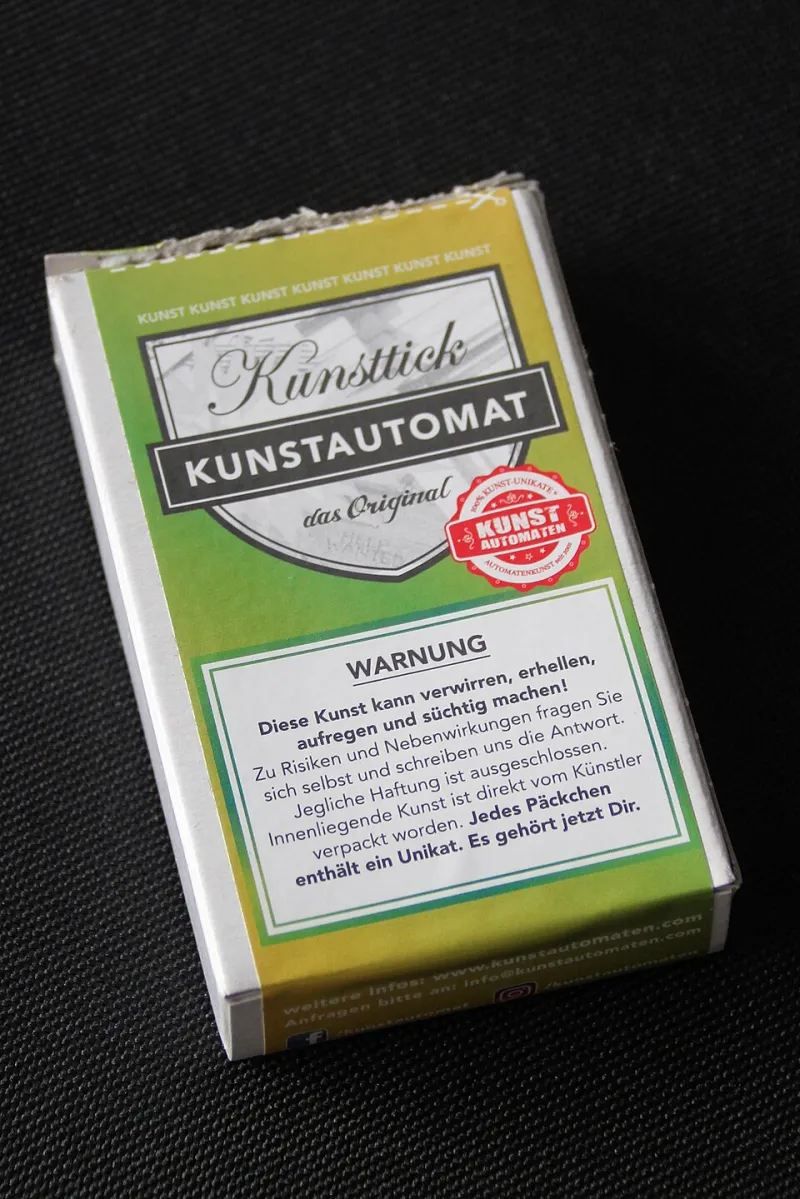
Photo: Stefan Oemisch, CC BY-SA 4.0, via Wikimedia Commons
The machine in the bus depot lobby does not sell chips. It sells a three-dollar linocut of a pigeon, a one-dollar button that says I rode the 14, and a five-dollar zine about abandoned motels. You feed it quarters, punch B4, and a small spiral coil turns with a satisfying clack. The art drops into the tray like a snack-sized prize.
That scene is playing out in more American break rooms, laundromats, and transit stations than you might guess. Artists and micro-gallerists are scooping up retired snack machines, giving them a second life as coin-operated exhibition spaces, and stocking them with prints, zines, tiny sculptures, and other oddities. The price points are deliberately low—usually $1 to $5—and the vibe is less white-cube gallery, more treasure hunt with exact change.
A tiny gallery with a coin slot
Most of these machines start as standard snack vendors: glass front, keypad, spiral coils, a coin mechanism that has seen things. Curators either keep the coils and fit art into the same footprint as a bag of pretzels, or swap in flat shelves for zines and prints. Some use a simple drop-shelf setup, where the art sits behind glass and falls forward when the coil turns. The mechanics are not glamorous. The magic is in the scale.
The idea has roots in the 1990s, when artists began treating vending machines as tiny storefronts. The best-known ancestor is Art-o-mat, the retired cigarette machines that dispense small artworks. The current wave is scrappier and more local: a break-room machine stocked by a printmaker, a bus-station machine curated by a zine collective, a laundromat machine that sells tiny paintings for the price of a load of laundry.
The economics of a three-dollar masterpiece
Used snack machines can run from a couple hundred dollars to a thousand, depending on size and whether the coin mech works. Location is often the bigger puzzle. A sympathetic bar owner might trade space for a cut of sales; a community center might ask for a small monthly fee; a laundromat might just want something interesting for customers. Curators usually make back materials and maybe a little beer money, not rent. The dollar-bill validator is often the first thing to break, and humidity is the enemy of paper goods. Jams happen. Sticky coins happen. The machine is the gallery’s bouncer, cashier, and temperamental landlord all at once.
Still, the math can work because the overhead is low and the audience is captive. A bus station has people waiting. A break room has people avoiding email. A laundromat has people with 28 minutes to kill. The machine does not need an opening reception. It needs to be stocked, labeled, and occasionally thumped.
Why low stakes make art less scary
Galleries can be wonderful and also a little intimidating: the front desk, the quiet, the sense that you might say the wrong thing about a painting. A vending machine asks nothing. You can look, laugh, walk away, come back with quarters. That low barrier is the whole point. Curators say the best-selling items are often funny, small, and specific—a tiny drawing of a local landmark, a zine about a bad job, a print of a dog that looks like it has seen too much. People buy them because they feel like souvenirs from a place they actually are, not investments.
It also turns browsing into a game. The glass front becomes a grid of possibilities. The price is posted in marker. The mystery is whether the coil will drop the thing you want or leave it hanging. That small suspense is weirdly delightful.
How to spot one, or start one
Spotting a micro-gallery takes a little practice. Look for a snack machine with no snack branding, handwritten index cards, or a social handle taped to the glass. Peek at the coils: if the items are wrapped in plastic sleeves and priced in singles, you are probably in the right place. Ask the counter staff. Curators are usually delighted to talk.
Starting one is a project, not a personality. Find a machine, confirm the coin mech works, and choose a location with foot traffic and a patient host. Price low. Stock variety. Label clearly. Keep a log of what sells and what jams. Expect to lose a few dollars to the coin slot and a few hours to maintenance. The reward is not a gallery opening. It is watching a stranger crouch down, feed in four quarters, and walk away with a tiny piece of art they did not know they needed.
At its best, the coin-op gallery is a side door into art—small, strange, and open for business.