The Fellowship Hall Casino: Inside the Bingo Nights Where Luck Is a Neighborhood Sport
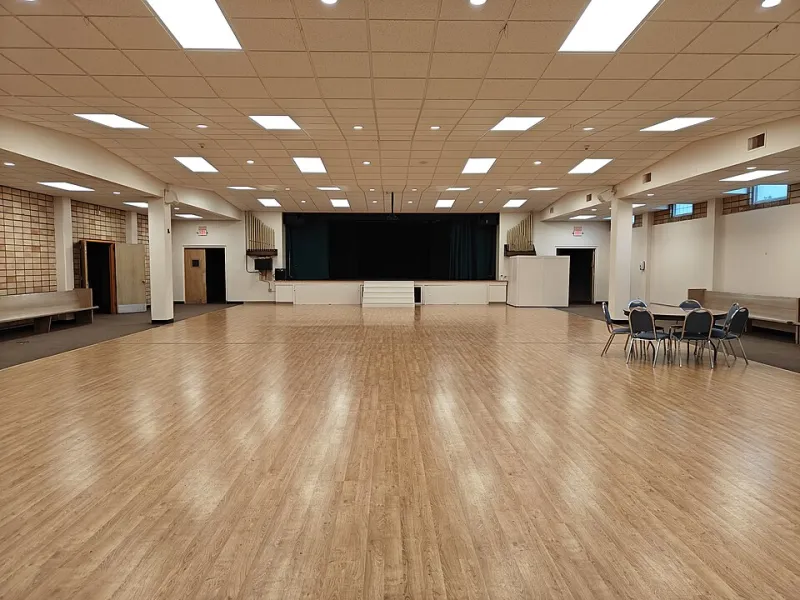
Photo: Chevsapher, CC0, via Wikimedia Commons
On a Thursday night in a church fellowship hall, the air smells like burnt coffee, lilac hand cream, and the faint mineral tang of dauber ink. A woman in a fleece vest arranges a plastic troll doll beside her bingo cards like a tiny bodyguard. Two tables over, a guy in his twenties wearing a hoodie and a very serious expression lines up four daubers by color. Somewhere near the kitchen, a volunteer is cutting a sheet cake into squares the size of playing cards.
This is not Vegas. There are no cocktails, no neon, and no one is getting comped. But the room has a current running through it that feels just as charged as any casino floor. The prize might be a $25 grocery gift card. The stakes, somehow, feel higher.
The $6 Night Out
Bingo has been a church-fundraiser staple for generations, but the version drawing crowds in 2026 is something stranger and more interesting than nostalgia. It is one of the last cheap nights out that does not require a reservation, a dress code, or a phone battery. In many towns, a pack of cards costs less than a sandwich. The snacks are free or close to it. The entertainment is provided by the room itself.
At a typical church-hall bingo night, you will see the full demographic spread of the zip code. Retirees who have claimed the same lucky seat since the Reagan administration. Parents who brought their kids because babysitters are expensive. College students who heard about it from a friend and came back the next week with their own dauber. The game is older than most of the people playing it, but the crowd is not.
The appeal is partly financial, but only partly. A movie ticket costs more and asks you to be quiet. A bar costs more and asks you to be socially available. Bingo costs almost nothing and asks only that you pay attention. That is a rare bargain.
The Caller Is the Headliner
Every bingo night has a caller, and every caller has a following. The good ones turn a random number generator into a variety show. They have rhythm. They have patter. They know when to pause for effect and when to speed up just enough to make the room lean forward.
The caller is part referee, part emcee, part local celebrity. People greet them by name. They ask about their knee. They complain about the lighting. The caller takes it all in stride, because the caller understands that the job is not really about numbers. It is about pacing.
A great caller can make a $10 prize feel like a jackpot. A bad caller can turn a room restless in minutes. The regulars have opinions about this. They will share them.
Etiquette Is the House Rule
For all the friendly chatter, church-hall bingo runs on a strict and mostly unspoken code. Do not talk over the caller. Do not crowd another player's card. If you leave the table, cover your cards or accept that someone might think you are done. Do not touch another person's dauber without asking. And under no circumstances should you announce a win until you are absolutely sure the numbers line up.
False bingo is the cardinal sin. The room forgives a lot, but it does not forgive a false bingo. The correction is usually gentle, but the silence that follows is not.
The etiquette extends to the prize table. Winners often choose the same modest items week after week: a gift card, a candle, a box of chocolates, a small kitchen gadget. Nobody grabs the best thing and runs. There is a rhythm to it, a sense that the game is less about accumulation than about taking a turn.
Lucky Socks and Plastic Trolls
Bingo players are not superstitious in a vague, shrug-and-smile way. They are superstitious with equipment. Lucky socks. A specific pen. A rabbit's foot that has seen better decades. A plastic troll doll, a small statue of a saint, a smooth stone from a beach vacation. One woman brings a tiny ceramic frog that she sets facing the caller. Another player refuses to sit with their back to the kitchen door.
The charms are serious business, but they are also a conversation starter. Younger players arrive skeptical and leave with a theory about which corner of the hall has the best odds. The older players pretend not to care, then quietly move their lucky troll an inch to the left.
Why Gen Z Keeps Showing Up
It would be easy to frame this as grandmas versus Gen Z, a generational face-off in a church basement. The reality is more cooperative. Younger players are not crashing the party. They are being absorbed into it, one card at a time.
Part of the draw is the analog novelty. Bingo is tactile. The cards are cardboard. The daubers squeak. The numbers are called out loud. In a world of endless notifications, a game that requires you to listen and look at the same time feels almost radical.
But the bigger draw is simpler: it is a third place. Not home, not work, not school. A room where you can sit next to a stranger and have a small, structured reason to talk to them. The game gives everyone a shared script. You do not have to be charming. You just have to play.
The Last Safe Bet
At the end of the night, the caller reads the final numbers, the winners collect their gift cards, and the volunteers start stacking chairs. The troll dolls go back into purses. The daubers get capped. Someone asks if the church will do it again next week. Someone always says yes.
Church-hall bingo survives because it is not trying to be anything other than what it is: a cheap night out, a neighborhood ritual, and a room full of people who are willing to pretend that luck is something you can hold in your hand. In 2026, that might be the safest bet in town.


