Rewiring the Body: Five Brain-Computer Interface Breakthroughs Restoring Agency to Paralyzed Americans
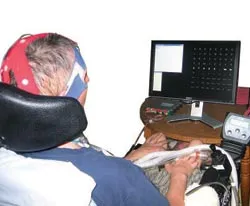
Photo: https://www.nlm.nih.gov/medlineplus/magazine/issues/summer07/articles/summer07pg20-21.html, Public domain, via Wikimedia Commons
The human nervous system communicates in electrical signals—patterns of ionic charge that propagate along neurons, cross synaptic gaps, and ultimately produce thought, sensation, and movement. When injury or disease interrupts that communication, the consequences can be devastating and permanent. Spinal cord injuries affect an estimated 300,000 Americans, with approximately 18,000 new cases occurring each year. For many, the loss of motor function represents not merely a physical limitation but a wholesale reorganization of daily existence.
Brain-computer interfaces—devices that establish a direct communication channel between neural tissue and external hardware—are increasingly offering a path through that barrier. The technology is not yet universally accessible, and significant hurdles remain before it reaches widespread clinical deployment. Nevertheless, the pace of advancement over the past five years has been striking. Below, we examine five distinct developments that illustrate both the promise and the complexity of this emerging field.
1. High-Density Cortical Arrays and Voluntary Limb Movement
The most established category of neural interface involves implanting electrode arrays directly into the motor cortex—the region of the brain responsible for planning and initiating voluntary movement. Early iterations of this approach, pioneered through the BrainGate consortium involving researchers at Brown University and Massachusetts General Hospital, demonstrated that patients with quadriplegia could use decoded neural signals to control a computer cursor. More recent iterations have expanded that capability considerably.
In trials published within the last three years, participants with cervical spinal cord injuries have used updated high-density arrays to control robotic arms with sufficient dexterity to perform functional tasks: pouring a glass of water, operating a touchscreen, and manipulating small objects. The key advance has been in signal decoding algorithms—machine learning models trained on each patient's unique neural firing patterns that translate intention into action with increasing accuracy. One participant in a Pittsburgh-based trial was able to achieve movement control sophisticated enough to play a simplified version of a video game, a milestone that captured public attention while illustrating the granularity of control now achievable.
2. Closed-Loop Systems Reconnecting Brain to Muscle
Implanted arrays that communicate with external robotic devices represent one branch of the field. A conceptually distinct approach attempts to restore movement through the patient's own musculature rather than a prosthetic substitute. Closed-loop neural bypass systems record motor cortex signals, process them in real time, and deliver precisely timed electrical stimulation to paralyzed muscles—effectively bypassing the damaged spinal cord segment entirely.
Researchers at Northwell Health in New York and at The Ohio State University Wexner Medical Center have reported cases in which participants with complete motor paralysis regained the ability to perform coordinated hand and arm movements using their own biological tissue. Because the system operates in a continuous feedback loop—adjusting stimulation parameters based on both intended movement signals and sensory feedback—it produces smoother, more naturalistic motion than earlier open-loop designs. Participants in these trials have described the experience of voluntary movement returning as profoundly significant to their psychological wellbeing, a dimension of the research that clinical teams are now systematically studying.
3. Speech Decoding Through Neural Signals
For individuals whose paralysis affects the respiratory and vocal systems, the loss of speech compounds physical disability with communicative isolation. Standard augmentative communication devices require residual motor function—eye tracking, facial muscle movement, or breath control—that not all patients retain. Neural decoding of attempted speech offers an alternative that bypasses the motor output pathway entirely.
A team at UC San Francisco published results demonstrating that a neural interface implanted over the speech motor cortex could decode attempted words from brain activity alone, achieving vocabulary sets of several hundred words with error rates low enough to support functional communication. A subsequent study from the same group incorporated a synthesized voice avatar, enabling a participant with locked-in syndrome to communicate in something approximating her own voice—a development that attracted international attention and prompted discussion about the identity dimensions of voice reconstruction technology.
The decoding architectures underlying these systems rely on recurrent neural networks trained on the patient's own attempted speech patterns. As training datasets grow and model architectures improve, researchers anticipate that vocabulary coverage and decoding speed will continue to increase substantially.
4. Non-Invasive Sensing and the Case for Accessibility
All of the approaches described above involve surgical implantation, which carries procedural risk, requires specialized neurosurgical infrastructure, and limits access to patients who meet narrow clinical criteria. A parallel research effort is pursuing non-invasive neural interfaces—systems that read brain activity through the scalp using electroencephalography, functional near-infrared spectroscopy, or emerging modalities such as optically pumped magnetometers.
While non-invasive systems currently offer lower signal resolution than implanted arrays, they present a compelling trade-off: no surgical risk, no hardware maintenance within the body, and significantly lower cost. University research groups in Texas, California, and New York are developing non-invasive BCI platforms specifically intended for home use by patients who lack access to major academic medical centers. Early trials suggest that with sufficient training and adaptive algorithms, non-invasive systems can support meaningful cursor control and basic communication, even if the ceiling of capability falls below that of implanted devices.
The accessibility dimension of this work is increasingly framed as a scientific priority rather than merely a policy consideration. If advanced neural interfaces remain available only to patients treated at elite research hospitals, the benefits of the field will accrue inequitably—a concern that federal funding agencies, including the National Institute of Neurological Disorders and Stroke, have begun to address through targeted grant mechanisms.
5. Bidirectional Interfaces and the Return of Sensation
The most recent frontier in neural interface research involves bidirectionality—devices that not only read motor intent from the brain but also write sensory information back into neural tissue. The majority of current clinical systems are unidirectional: they capture outgoing motor signals but provide no return channel for touch, pressure, or proprioceptive feedback. This limitation means that users of prosthetic limbs, however dexterous, cannot feel what those limbs are touching.
Researchers at the University of Pittsburgh and the University of Chicago have demonstrated prototype bidirectional systems in which stimulation of the somatosensory cortex produces sensations that participants describe as approximating touch on the prosthetic hand. When integrated with motor decoding, these systems allow users to adjust grip force in response to perceived tactile feedback—a capability that substantially improves the functional utility of prosthetic manipulation. Participants in these early trials have described the experience of sensation returning as emotionally significant in ways that exceeded their expectations.
A Technology Confronting Its Own Success
The progress documented across these five areas represents a genuine scientific achievement, one that would have appeared speculative a decade ago. Yet the field's advancement has also surfaced a set of questions that technical expertise alone cannot resolve. Who owns the neural data recorded by an implanted device? What obligations do manufacturers bear to patients whose implants become obsolete? How should the costs of these interventions be structured to ensure that Americans without access to premium insurance coverage are not systematically excluded?
These are not peripheral concerns. They are integral to whether the microbiome revolution in neurotechnology translates into broadly distributed human benefit or remains a remarkable capability available only to the few. The research community, regulatory bodies, and healthcare policy institutions are each beginning to grapple with them—and the answers they reach will shape the legacy of this field as decisively as any electrode array or decoding algorithm.