The Coldest Gallery in the Fairground: Inside the Butter Sculpture Booths That Vanish by Sunday
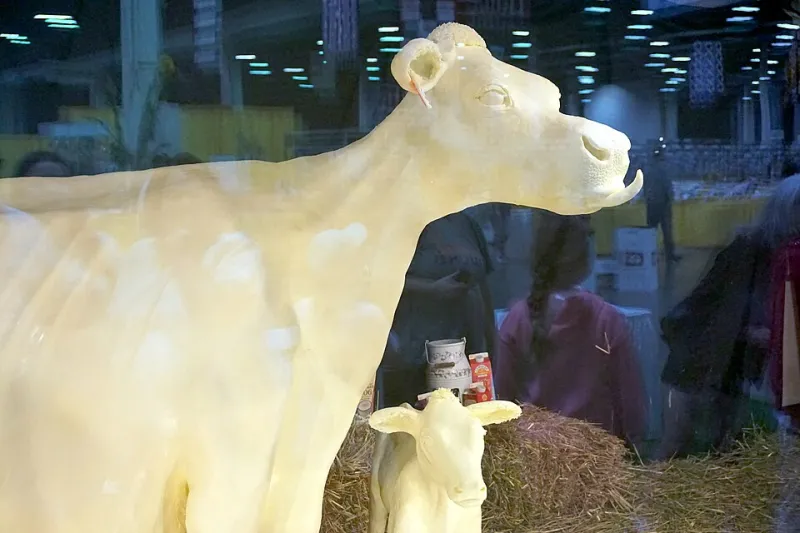
Photo: Michael Barera, CC BY-SA 4.0, via Wikimedia Commons
The line for fried dough is long, the tractor pull is loud, and somewhere past the livestock barns a small crowd is pressed against glass, breathing fog onto a window and staring at a cow made of butter. It is not the strangest thing at the fair. It is probably not even the strangest thing in that building. But it might be the most temporary.
State fairs across the Midwest have turned butter into a public art form: cows, athletes, farm scenes, local celebrities, and full dioramas built inside refrigerated booths. The medium is cheap, familiar, and deeply weird when you think about it for more than a second. It is also perishable. The sculpture is not made to be bought, stored, or streamed. It is made to be looked at now, by people who will never see it again.
A Sculpture You Cannot Take Home
Butter is a difficult collaborator. It is firm when cold, slick when warm, and unforgiving when a tool slips. Sculptors work in chilled booths, often in coats and gloves, using loops, spoons, wire, and small wooden tools to coax detail out of fifty-pound blocks. The work has the intensity of ice carving without the dramatic meltwater. Instead, there is a low refrigeration hum and the occasional squeak of a shoe on a damp floor.
The booth is part studio, part display case, part stage. Fairgoers watch the sculptor's back as they work. Children ask whether it is real butter. Adults ask how long it took. Someone always asks whether it will be eaten. The answer, depending on the fair and the year, is usually no — but the question never gets old.
The Choreography of Cold
What looks like a novelty is actually a small logistics operation. Butter blocks arrive cold and heavy. Frames and supports go in first. The sculptor roughs out the shape, then refines it as the crowd changes. 4-H helpers and fair staff ferry tools, wipe condensation, and keep the case at the right temperature. A butter cow is not just carved; it is managed.
Timing matters. Work too warm and the butter slumps. Work too cold and it fights back. The best sculptors develop a feel for the room the way a baker develops a feel for dough. They know when to step back, when to touch up, and when to let the glass do the rest.
Why Fairs Love a Perishable Star
The butter exhibit is partly agricultural promotion, partly local pride, and partly a shared calendar. Families return to the same booth each year to see what the theme will be. The subject changes, but the ritual does not: queue up, peer in, take a photo, explain to a kid that yes, it is really butter, and move on to the next barn.
That repeatable moment is the point. A butter sculpture is not precious in the way a museum object is precious. It is precious because it is scheduled to disappear. The fairground is full of things you can only get in August — the food, the light, the smell of sawdust and manure — and the butter booth fits right in. It is a souvenir made of memory instead of merchandise.
When the Glass Fogs Up
By the final weekend, the booth has a different mood. The details soften. A ear droops. A flag sags. The refrigeration is still running, but everyone knows the clock is ticking. Fairgoers come by for one last look, and the sculptor may do a few careful touch-ups, knowing the work is already leaving.
The melt is not a failure. It is the deal. The exhibit is a civic tradition built on the understanding that nothing lasts, not even a fifty-pound cow in a cold case. When the fair closes, the booth is cleaned, the remnants are routed to composting, rendering, or other waste programs depending on the fair, and the following year brings a new block, a new theme, and a new crowd at the glass.
That is the quiet magic of the butter booth. It asks you to show up on time. It rewards a little patience. And it reminds you that some of the best things a town makes are designed to be gone by Sunday.