Folding Chairs, Big Screen Dreams: The Fellowship Halls Showing Movies You Can’t Stream
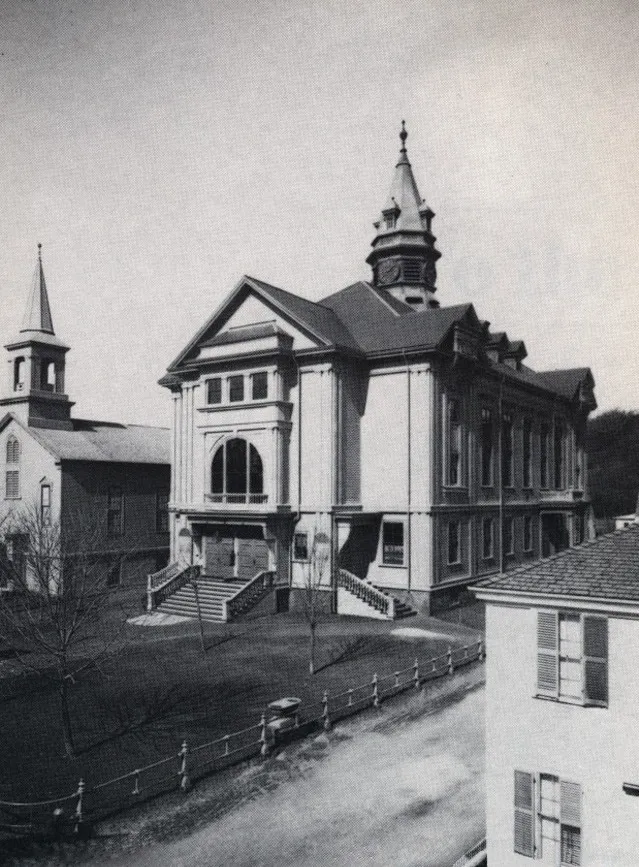
Photo: Unknown photographer, Public domain, via Wikimedia Commons
On a Friday night in Albuquerque, the line for the potluck starts before the movie. Someone has brought green chile stew. Someone else has brought a sheet cake with “ENJOY THE SHOW” written in frosting. The projector is used, the screen is a white bedsheet pulled tight over a frame, and the seating is folding chairs arranged in a loose semicircle. The feature is a 1970s science-fiction film that most of the room has never heard of. By the closing credits, nobody is checking a phone.
This is the church-basement cinema, and it is having a moment. Not a glossy one. There are no reclining seats, no surround sound, and no $18 popcorn. Instead, there are small congregations, synagogues, and community centers showing cult classics, foreign films, and locally made documentaries to audiences who came for the movie but stayed for the conversation.
The $200 Projector Doctrine
Pastor Janelle Ortiz runs a monthly film night at a Methodist church in Albuquerque. She calls it Reel Fellowship, though the name is less important than the setup: a projector bought secondhand, a donated soundbar, and a licensing arrangement that lets them screen films legally. The budget is tiny. The ambition is not.
“We are not trying to recreate the multiplex,” Ortiz says. “We are trying to make a room where people stay awake to the credits.”
That distinction matters. A church basement cannot compete with a chain theater on picture quality or seat comfort. It can compete on intimacy. It can show a movie that would never fill a multiplex, then invite everyone to argue about it over rice and beans. It can make a Tuesday night feel like an event.
The logistics are scrappier than they look. Public performance rights are a real consideration, and organizers learn quickly that showing a DVD from the library is not the same as showing a film to a room full of people. Some rely on umbrella licenses. Some stick to public-domain titles. Some screen local documentaries with the filmmakers’ permission, often with the director sitting in the third row.
A Calendar Built by Conversation
At a synagogue in Cleveland, Rabbi Dan Feldman hosts a monthly bagel-and-film morning. The films are chosen by a sticky-note vote on a bulletin board. Recent picks have included a French comedy, a documentary about a neighborhood marching band, and a 1980s fantasy film that several attendees remembered from childhood.
“The algorithm gives you more of what you already like,” Feldman says. “We give you what your neighbor likes. That is a different kind of recommendation.”
The audiences are equally unalgorithmic. Retirees sit next to teenagers. Families bring children in pajamas. A retired electrician runs the projector. A college student volunteers to make captions. Someone always brings a thermos of coffee that is too strong. The room is not demographically tidy, and that is part of the appeal.
The Congregation of the Closing Credits
Marcus, a 17-year-old regular at the Albuquerque screenings, says he started coming because his grandmother needed a ride. He kept coming because the talk afterward was better than the movie. “At home, you watch something and then you just scroll,” he says. “Here, you have to sit there and hear what everyone else thought. Even the boring parts become interesting.”
The talkback is the point. Organizers often build in fifteen minutes of discussion, but it regularly stretches to thirty. People disagree. People recommend other films. People linger in the hallway. The fellowship hall becomes a place where a movie is not a product to be consumed but a room to be shared.
That is the gap these screenings fill. Chain theaters have consolidated. Streaming algorithms optimize for completion, not conversation. A church basement optimizes for company. It is a low-stakes social club with a screen at the front.
Why the Fellowship Hall Works
Folding chairs are honest. They do not pretend to be luxury recliners. The room does not pretend to be a cinema. That lack of pretense lowers the stakes. You can walk in late. You can leave during the credits. You can bring a casserole. You can ask a question that would feel embarrassing in a theater lobby.
The $200 projector can beat the multiplex because the multiplex is not really competing on the same thing. The multiplex sells immersion. The fellowship hall sells belonging. One is engineered; the other is improvised. Both can be wonderful, but only one of them ends with someone pressing a slice of cake into your hand.
The Logistics of Loaves and Films
None of this happens without a few practical saints. Someone has to learn the projector. Someone has to test the sound. Someone has to make sure the DVD player is not set to the wrong aspect ratio. Someone has to remember that the thermostat in the basement is unreliable.
The biggest expense is often not the film but the food. Many screenings are free, with a suggested donation or a potluck sign-up. A few pass a hat. The goal is not profit. It is turnout.
And turnout is growing, at least in the rooms that have figured out the rhythm. The formula is not complicated: pick a film that is a little unexpected, make the room comfortable, feed people, and let them talk. The rest is folding chairs.
“People think community is a big word,” Ortiz says. “Mostly it is a small room and a movie and someone saying, ‘Did you understand the ending?’ That is enough.”
So the next time you see a hand-lettered sign for a movie night at a church or community center, consider it. The seats might be hard. The screen might be a bedsheet. The popcorn might be from a stovetop. But the room will be full of people who chose to be there together, which is more than most streaming queues can promise.