Wheelies Between the Stacks: The Quiet Rise of the Library Book Cart Drill Team
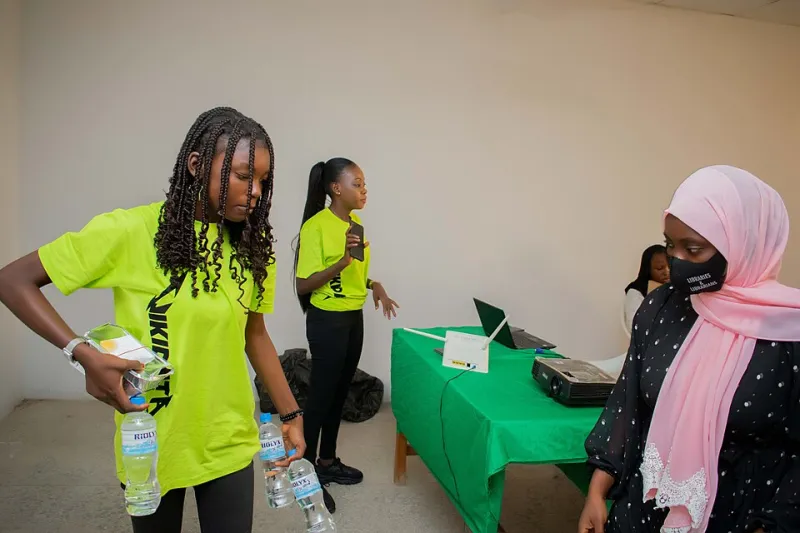
Photo: Linason Blessing, CC BY-SA 4.0, via Wikimedia Commons
The first thing you notice is the squeak. Book carts are not built for choreography. They are built for hauling forty pounds of hardcovers across linoleum, and they announce themselves accordingly. But on a Saturday morning in a community hall, a line of librarians in matching teal shirts is rolling in perfect unison anyway, four carts wide, and the squeak lands almost on the beat. Then the shush happens, all at once, seven fingers to seven lips, and the room loses its mind.
Nobody claps louder at a library event than the people who spend their weekdays telling teenagers to use their inside voices.
A Very Serious Nonsense
Book cart drill teams are exactly what they sound like, and also something a little stranger. They are teams of library staff and volunteers who choreograph routines using rolling book carts as props, vehicles, and percussion. The format has been a fixture at the American Library Association's annual conference since the mid-2000s, and it has since spread to state library associations, regional conferences, and the odd county fair, where a team of catalogers may suddenly find themselves performing between a pie contest and a tractor display.
The routines tend toward the theatrical. You'll see figure eights tight enough to make a shelving clerk wince. You'll see carts used as couches, filing cabinets, and, memorably, a mechanical bull. You'll see a librarian in a shark costume weave between two carts labeled "Reference" and "Return." The music is loud, the costumes are homemade, and the judges are usually holding clipboards with an expression borrowed from a very tired umpire.
What separates a drill team from a parade is the same thing that separates a marching band from a group of people walking. There is formation. There is timing. There is a plan for where each cart stops, and what happens when a wheel catches the edge of a floor mat.
The Rules of the Road
Most competitions are judged on a handful of categories: precision, creativity, costume, and a vague but essential criterion that organizers usually call "library spirit." Points get docked for collisions. Points get awarded for a clean reverse. Teams have been known to practice in empty parking lots after closing, sketching formations in chalk and arguing about whether the third turn is a pivot or a spiral.
"The cart is the whole challenge," one longtime competitor told a conference panel a few years back, and every teammate in the room nodded. A cart has two fixed wheels and two swivels, which means it can turn on a dime and also refuse to. Load it wrong and it wobbles. Load it right and it hums. Veteran teams develop opinions about which cart in the building is the good one, the way a drummer has opinions about a snare.
The best routines build in room for disaster. A dropped book gets kicked neatly back into a cart, or a team member picks it up and does a little bow. The deadpan matters as much as the dancing. A librarian committing fully to a bit about overdue notices, stone-faced, is funnier than any elaborate set piece.
Why They Do It
Ask a team captain about the appeal and you'll get a few answers. The first is morale. Library work is a lot of quiet, careful labor, and the drill team is a chance to be loud and ridiculous with people who understand exactly how loud and ridiculous you can be in a building that closes at six. The second is advocacy. A public library fighting for a budget line at city hall is less memorable than a public library that just did a synchronized cart routine to a disco track in front of four hundred people. Teams have been booked for school assemblies, hospital fundraisers, and, in at least one case, a minor league baseball game.
And the third is simply that it's fun. There is a particular joy in watching a bunch of people who spend their days organizing other people's information organize themselves into a triangle. Order is the whole job. Here, order is the show.
The Fairground Circuit
Beyond the conference circuit, book cart drill teams have found a comfortable second life at community events. County fairs, library open houses, and summer reading kickoffs have all played host. The routines get shorter and the crowds get younger, but the energy doesn't change much. Kids who have never seen a librarian outside of a desk suddenly see one doing a wheelie, and something clicks. The library is not a building you have to whisper in. It's a place that does stuff.
The teams themselves are small operations, usually six to eight people and a captain with strong opinions. They practice on lunch breaks. They sew their own costumes. They keep a shared spreadsheet of cart inventory. Somebody's cousin builds the props out of cardboard and spray paint. It is, in other words, exactly the kind of volunteer culture that small libraries run on, just pointed in a slightly sillier direction.
The Point of the Page-Turn
A drill team meets a need nobody wrote into the strategic plan. It gives staff a way to be on the same side of something, and it gives a community a reason to cheer for the people who check out their books. If the cart squeaks, the crowd cheers harder. If the routine falls apart, the team laughs and finishes anyway.
That's the page-turner in the whole thing, really. Precision is the goal, but the good teams know the routine is a container for something warmer than perfection. A room full of people, on their feet, absolutely delighted by the sight of a book cart hitting its mark.
So the next time you hear a familiar squeak behind you in the stacks, look closer. It might just be a librarian with a plan, practicing for the fair.